
“The Wandering Earth” | 2019 Chinese SciFi

Comment

Sophia Kalantzakos | 4.16.20

It’s easy to read a lot in the film The Wandering Earth. It’s a Chinese sci fi blockbuster of Hollywood style dimensions in which the earth is saved by the courage, self-sacrifice, and intuition of a cast of Chinese heroes. For starters and even though the storyline, visual, and sound effects are as “American” as they can get, it’s refreshing to see a non-US executed salvation of humanity. Yet, even while looking and sounding formulaic, there are still numerous interesting elements that make this movie stand out. In a time of geopolitical realignments, for instance, China has achieved superpower status and this film, in a way, celebrates its rise. Produced by the state-owned China Film Co., Ltd., Beijing Culture, G! Film and Alibaba Pictures, one steeped in geopolitical debates cannot overlook the win win state-private partnerships that made the film possible. Ties of filial piety, a longue-durée time scale given that the earth needs to travel for 2500 years (100 generations long) to its new destination, a world government that responds in French and is steered by the familiar members of the current UN security council, and a message of world collaboration in the face of adversity echo main tenants of the Chinese polity. Space station friendships between Chinese and Russian astronauts, a nod of collaborative spirit toward Japan, and the near invisibility of the US footprint in any of this would certainly strike a chord of patriotic pride within the PRC.

The story is loosely based on Liu Cixin’s book of independent novellas by the same name. Though movie scripts often borrow only elements of the story they are based on, this film- for all the emotional action – has chosen to take a mere fraction of what made the particular novella interesting. Why is the earth wandering after all? Does nobody raise the question of whether or not moving the earth into another solar system was a good idea in the first place- was it a hoax; a betrayal of humanity “fabricated by the Unity Government to bring about its dictatorial empire?” Is the sun really going to explode? Are there protests and differences of opinion among the people? In Liu Cixin’s story there are: the Spaceship Faction versus the Earth Faction- fight it out with anger, frustration and violence that culminates in outright rebellion that ends up overthrowing and killing the Unity Government for lying to the people (even though in the end what the government had said takes place). In the movie none of this matters. In fact, one cannot help but wonder if this is really a story of hope – as the movie trailer suggests. Earth has been destroyed, the surface lifeless serving only as a source of rock to be mined for fueling the engines propelling Earth to the its new home. Humanity survives. What kind of humanity? A manic kind of humanity with the usual good guys and bad guys, black markets and criminals. An overcrowded society living underground – like the miners in Zola’s Germinal coming out by special permission to fuel the engines. What does hope look like after the planet that we know as Earth has been destroyed? Maybe the film foreshadows the outcome of unbridled climate change where humanity survives at the expense of every other living thing; after all both story and film confirm that Earth had changed long before it embarked on this journey. Is it worth salvaging this kind of planet? Maybe it would have been better to be consumed by Jupiter but, in the name of humanity’s salvation and to continue the wandering to the next destination, our heroes sacrifice Noah’s Ark filled with our cultural heritage, seeds, and embryos that may have been humanity’s legacy long after it abused its home and brought upon its destruction. It seems delusional to think that Earth could ever go back to what it once was even if it makes it to Alpha Centauri. Maybe, the Wandering Earth, is just a pretty good attempt to win win the box office. In any event, for a brief moment, it gives us food for thought.

Response

Jeremy Adelman | 4.16.20

Sophia makes a good point that wanting to be a super-power requires making super-hero blockbuster, as if movies of this sort belong in the kit bag of soft-power arsenal for global muscularity.  At least there were no sweaty hunks in this movie (though there was some gratuitous machine gunning of other planets; doesn’t Jupiter get some rights in this galaxy?).  Sophia asks: “Does nobody raise the question of whether or not moving the earth into another solar system was a good idea in the first place?”  I say: right on!  I mean, how are neighboring galaxies going to feel as jet-setting Earth barges into their orbita?  It seems so unfair – but isn’t that what super-powers do?  They make others pay without even knowing it and then act surprised. 

Growing up in Canada, I always had mixed feelings about American white-saviour flicks.  Canadian movies and novels were such downers; we had no rockets, no Marines.  There was the awe, the admiration, the gratitude that someone out there decked in stars and stripes was going to save the rest of us.  But I could never shake the feeling that these were movies about someone else’s heroism, not mine, not my neighbour’s, and not of the other bystanders to American bravura.  What they impressed with spectacle they denied to spectators who didn’t have this flag as theirs.

Wandering Earth, partly because it’s a bit childlike, brought back childhood memories.  Only this time the flag was a different colour.  In fact, the politics of flags in this film was far from discreet.  They were all over the place; every uniform sported one and since everyone was uniformed the banners were hard to miss.  I’d be hard-pressed to recall a recent movie that displayed them so ostentatiously – which had the effect of noting to the rest of us bystanders that, especially for those who don’t have flags at all, that they don’t belong in this super-power epic even if they are huddled underground waiting to be saved.  So, while I marveled at giant Tonkas smashing their way across the blackened landscape, admired the heavy-metal infrastructure that would make Joseph Stalin fume, and laughed at the cheesy teenage speech about hope (wondering if I was supposed to get weepy instead), in the end this reminded me of what’s unsatisfying about epics about the showcased saviours and the hidden saved.

Bastiaan Bouwman | 4.16.20

In The Uninhabitable Earth, David Wallace-Wells remarks on the challenges in producing fiction about the climate crisis. We have plenty of disaster movies and series about the world after an apocalyptic event nearly wipes humanity off the face of the earth, but climate change is a problem that eludes effective dramatization. One might read The Wandering Earth – beyond its intention to entertain a global mass audience, rake in a good profit, and bolster a sense of China’s technological and cultural ascendancy, as Sophia notes – as an effort at remedying this problem, using a single key sleight of hand. Instead of climate change as it presently confronts us, the existential threat is the expansion of the sun (a phenomenon that in reality is set to occur on a timescale of billions of years) in a matter of one or two centuries, prompting the earth’s forced migration to another solar system. As a planetary ‘climate refugee’ it is blissfully unhampered by border controls, but nevertheless engaged in a perilous journey, and without a recipient ‘host society’ to look forward to, merely the space to fashion a new world.

 Does this sleight of hand invalidate the comparison with contemporary climate change? On the one hand, the scientific predictions at the more extreme end of the spectrum, which Wallace-Wells cautions us are more likely to become reality than we often assume, especially if the world is insufficiently decisive in its response, are not that far from a wipe-out scenario. If a variety of outcomes like increases in temperature, ocean acidification, and mass extinction could reinforce each other and change our environment too rapidly for the vast majority of the Earth’s population to adjust, the imperative to take swift action would seem as urgent as in the film. Fortunately, climate change – unlike the sun’s expansion – is man-made, so we could presumably manage it without resorting to the draconian utilitarian measures deployed in the film. On the other hand, the reality may be that climate change is different in that it affects the world’s population in highly uneven ways. The incentives to take action are thus not existentially urgent on the part of those best positioned to do so. If our takeaway from this film, then, is that only an all-encompassing threat will generate a sufficiently robust response, this draws our attention to the importance of highlighting the cross-cutting significance of the threats posed by climate change.

Claire Vergerio | 4.17.20

As Sophia notes, it’s easy to read a lot into the film The Wandering Earth. While it has all the hallmarks of a cookie-cutter Hollywood blockbuster, everyone—including, as Bastiaan found out, whoever reviewed it for the Chinese People’s Daily—seems to think there’s something quintessentially Chinese about it. Perhaps The Wandering Earth reveals something about China’s changing self-awareness as a rising superpower. Perhaps it gives us an unprecedented lens into its vision for a future world order (one in which the US is conspicuously absent). Perhaps the bits of the plot that seem most at odds with Hollywood blockbusters are windows into China’s cultural essence. Or perhaps not. As the old Latin saying goes: Pro captu lectoris habent sua fata libelli—literally, according to the capabilities of the reader, books have their destiny. So much of what we read into this film is first and foremost about ourselves. It reveals our expectations of what “Chineseness” entails and our desperate search for clues into how China might decide to project its newfound power. This film was a huge box office hit in China, becoming its third highest grossing film of all time. Perhaps the one thing we can safely intuit, then, in light of Sophia’s comparison of the film with the novella, is that these days, epic narratives that steer away from asking any difficult questions are just as popular in Beijing as they are in Hollywood.

Ayça Çubukçu | 4.18.20

Given its sponsorship by the People’s Republic of China, the temptation is there, as Claire notes, to see the Wandering Earth as an essentially Chinese story about humanity’s fate. The Chinese state would welcome such a temptation, I imagine, as if it were the representative not only of generations of Chinese people in the past and present, but also in the future, as long as the world lasts. But that, I am afraid, is the sovereign dream world over, not one particular to the Chinese state. In this sovereign dreamworld, I would like to note the unimaginative fate of “humanity” under a world (or rather, inter-national)government. As Jeremy notes, “the politics of flags” in the Wandering Earth is telling, every uniform has one—a national one that we-of-this-world-of nation-states can readily recognize. In fact, thousands of years, hundreds of generations from now, humanity is “still” understood in national ways: one-nation and one-flag at a time. Humanity is “still” governed through a global Security Council, where China, of course, is “still” a permanent member—only this time, in the position of humanity’s saviour. Not that one should expect “progress.” Unless what is meant by progress turns out to be, as Walter Benjamin once said, one single catastrophe.

Pascale Siegrist | 4.18.20

What can be said of a – let’s face it: not exactly great – movie if a review is not what we have in mind? Previous commentators have speculated on what a Chinese take on the tropes of the sci-fi-apocalypse genre might tell us about climate change and the geopolitical visions espoused by the PRC (represented here in the film’s complex funding architecture rather than its so far unnamed director, Frant Gwo). Claire and Ayça, on the other hand, alert us to the politics of watching ‘foreign’ films as a supposedly unmediated path of access to a ‘foreign’ worldview. It is certainly tempting to draw comparisons to The Wandering Earth’s Western cousins, most obviously to Christopher Nolan’s Interstellar: Why does is this father not get to keep his promise of return? Why didn’t Gwo consult with astrophysicists for a plausible storyline and imagery if the PRC is so eager to showcase its scientific prowess? Do the Confucian aphorisms serve the same mantra-like function as Dylan Thomas’s poem? Why are there no human defenders of ‘Plan B’ in this version? Why don’t we get rewarded with the cathartic view of an earth replenished after escaping the catastrophe? Why is the past of Gwo’s Earth entirely fictional, where Nolan so elegantly embeds his story in the Dustbowl? But such questions quickly bring us into the territory of the movie review, and a condescending one for that, not unlike the fascination with which one might watch the cultish ‘Turkish Star Wars’. 

So the real question that I want to raise here is how the issue of the movie’s ‘Chineseness’ – and our own ideas of ‘Chineseness’! – relate to a second point Sophia, Jeremy, Bastiaan and Claire have all stressed: that the Wandering Earth is a relatively conflict-free, or perhaps, a post-conflict planet. If there was controversy about decision to sacrifice half the earth’s population, this seems to have largely abated. The United Earth Government is quickly swayed by a single devoted captain. As if to calm the fears of the critics of China’s potent surveillance state, even the acronym-bearing AI-system, that apparently essential feature of any space station (MOSS in this case), can be outwitted with no more than bottle of vodka, conveniently left in place by the Russian colleague. As Gwo turns the world-saviour movie into a truly universal genre, the answer appears to lie in the magnitude of the threat, which left no other choice but to bundle all resources. But in our current crisis on The Staying (at home) Earth, where an American each-to-themselves, a WHO internationalist and a Chinese damage-control-through-health-diplomacy vision compete, it is becoming apparent that opposing universalisms themselves can be a source of conflict. 

Onur Ulas Ince | 4.19.20

As have already been noted, a number of framing choices distinguish the “Chinese” way of saving the world from its more familiar American predecessors: the dynastic temporal scale that does not promise redemption even as it counsels patient faith in its possibility (vs. the immediate viewer gratification offered by a redemptive finale); the sequential, unceremonious acts of self-sacrifice for collective survival (vs. dramatised acts of heroism that individuate the performer of the act); and the dogged insistence on the inter-national  coordination of the response to save the species (vs. the fundamental reorganisation of planetary politics under a unitary system of authority and substantive principles). Whether avowed or attributed, these choices align with a geopolitical stance suspicious of the discourses of individualism, universalism, and cosmopolitanism serving as vectors and veils of imperial or hegemonic intent. 

Beneath the divergent geopolitical and temporal imaginaries of collective mobilisation, however, lies a prominent common fidelity to technological solutions to the biggest problems confronting humanity. Building 11,000 fusion propulsion engines to pop the plant off its orbit makes the current proposals to dim the sun by stratospheric aerosol injection look like frying eggs on a Tuesday. A rather convenient plot strategy that liberates this technological fix from the ethical burden of its gargantuan sacrifices is to pose the catastrophe as entirely exogenous (the sun flips the bird at us), enlisting it more easily to the deep modernist trope of humanity facing down an alien nature with resolve and ingenuity. Giant trucks, excavators, exoskeletal thermal suits (strangely, with robotic chain guns attached to them), and above all fusion reactors are all monuments to the power that human beings conjure up in carving up a space for themselves (literally) in an uninhabitable earth and (metaphorically) in an unwelcoming solar system.

The trope is of course not unique to Wandering Earth and dates back to earliest disaster blockbusters like Michael Bay’s Armageddon (though one ought to admit that blowing up an asteroid appears marginally more glorious than a B- science project next to igniting Jupiter’s atmosphere). The broader point is, with a nod to Bastiaan, the solution would look a lot more ambiguous if technology and alienation from nature were presented as part of the problem — which is precisely the starting point of Bong Joon-ho’s Snowpiercer, where the ice age that entraps the remnants of humanity in a train is caused by the very effort to combat climate change by geo-engineering the atmosphere. And whereas in Wandering Earth everybody flies coach to the new solar system (at least in underground Beijing), and the only lines of distinction are the horizontal ones of flags and languages, Snowpiercer focalises the unrelenting class hierarchies that mediate “humanity’s” exposure to anthropogenic climate destruction. 

Perhaps to force a connection, both Demain and Wandering Earth hypostatise what they present as the principal threat, in which the audiences interpellated to align with the narrators or protagonists are not implicated. Evoking a nefarious, if nebulous, process of corporate globalisation transpiring “out there” is no doubt helpful for casting into relief the local practices of resilience and sustainability, as casting the extinction of humanity as imminent and non-negotiable conduces to imagining the scale of collective mobilisation and sacrifices likely necessary to counter it. But playing down, if not obfuscating, the social-relational aspect of anthropogenic climate change is the price paid for getting the message across. 

A less forced connection presents itself to the pervasive reaction to the SARS Cov-2 pandemic, which paints the pathogen as a force of nature that has arrived from the wild “out there,” deflecting attention from the social-relational conditions of its zoonotic transfer, spread, and differential toll across countries. To echo Pascale here, spotlighting the sheer magnitude and scale of the pandemic, epitomised in the mantra “we’re all in this together,” is instrumental to bundling resources at one level. But what that mantra hides from sight — put bluntly, a system of privatised gains and socialised losses — is also arguably the reason why the political and economic elites so readily turn to that mantra in times of crisis, whether they speak French, Chinese, or English.
“Tomorrow” (French: “Demain”) | 2015 French documentary

|

Comment

Claire Vergerio | 4.8.20

As the global environmental catastrophe continues to deepen, the Covid-19 crisis unfolds, and the global economy slowly grinds to a standstill, more and more people are asking: what next? After the inevitable recession that will likely plunge the world into another decade of financial instability, will we go back to business as usual or will we strive towards new developmental models, for better or for worse? Since a significant portion of the world population finds itself stuck at home with few of the usual distractions, it may be an opportune moment to ponder what could be possible, and perhaps even to stretch the boundaries of the imaginable. We watched the widely acclaimed 2015 French documentary Demain and reconvened to share our thoughts. This is a forward-looking film that emphasizes not just what can be done but what is already being pursued to take our societies down more sustainable paths. It showcases vignettes ranging from San Francisco and Detroit to Todmorder, Bristol, Rejkajvik, Copenhagen, and Kuttambakkan. At a time when our narratives of steady progress are once more collapsing, the film’s motto is compelling: “Start small to grow big, and write a new story for the generations to come.” In its emphasis on the small, Demain echoes an earlier documentary about our ecological, financial, and political crisis: Solutions locales pour un désordre global (Local Solutions for a Global Disorder, 2010). But for all there is to like about these charmingly handpicked examples of new thinking, one recurring question remains unaddressed: how do we scale up the various local solutions the film presents us with?

While one can certainly admire the achievements of a small permaculture farm in Normandy, some of these vignettes seem so sui generis that presenting them as windows into a better future can come across as rather pie in the sky. The film is at its strongest when it focuses on innovative schemes that have been successfully put in place at city level, in its exploration of the move towards zero-waste in San Francisco or the gradual displacement of cars in Copenhagen, or even at national level, in its discussion of Finland’s world-famous education system. For one of the greatest challenges we face is how to go from writing a new story in theory to implementing it in practice and on a scale large enough to alter our global trajectory. The failure to put in place global solutions to our global problems—from climate change and the sixth mass extinction to mounting social inequalities and catastrophic pandemics—can sometimes lead to the fetishization of local solutions. Nevertheless, it seems that the key lies in creating models that allow for the different parts of the system to work together, within an overarching vision that gives sufficient leeway to more granular levels of development for creative thinking and community-building to thrive.

The Finnish education system is a compelling example: the national government implements a framework that not only gives individual teachers an unprecedented amount of agency but also centrally invests the necessary resources to train these teachers in the first place. With regards to the environmental crisis, Extinction Rebellion has adopted a model that is not dissimilar in its outlook: agree globally on the end goal, i.e. act now to tackle the climate and ecological emergency, and on a procedural means, i.e. set up citizen assemblies to decide what must be done, but bank on the power of local agency in all its diversity to concretize any measures. It is a given that different citizen assemblies will come up with different solutions to the same problem that are likely to reflect the heterogeneity of political and cultural sensibilities. This is about navigating the Scylla of one-size-fits-all models and the Charybdis of a vision-less free-for-all, two seductively simple approaches that will lead us nowhere good. We need to find ways to reconcile the global and the local with everything in between, notably incorporating national infrastructures as one of our many points of leverage. Despite its emphasis on smallness, Demain actually shows us that new stories are being written on all these different scales. The key is perhaps not to get hung up on size, and rather to start figuring out what type of story we can tell to allow all the parts to finally come together.

Response

Onur Ulas Ince | 4.10.20

Of the responses to climate change that Demain invites its viewers to contemplate, one is salient by its absence: the role of institutions. This is a variation on Bastiaan’s observation on the apolitical tenor of the directors’ framing of the problem and the solutions. Each vignette not only portrays self-evident consensus amongst the members of an assumed community but projects a semblance of spontaneity in consensus formation. Overshadowed by dramatised spontaneous agreement are various institutional infrastructures that disseminate knowledge, coordinate action, and mobilise resources and regulate access to them — for instance, municipal codes that allow urban gardening on public land in Todmorde; official partnerships that integrate urban composting in San Francisco with wine growers in Napa Valley; gram sabha through which local priorities are identified and negotiated in Kuthambakkam; a national legal-administrative framework that mandates stringent accreditation for teachers in Finland even as it accords them great margins of latitude in practice. Dialling in on institutional frameworks no doubt makes for a less captivating production but is crucial especially for surmounting the obstacles involved in upward scaling (assuming for a second that we remain with the bottom-up predilection of the message). Deficits of coordination, trust, and legitimacy become pronounced at socio-spatial and temporal scales that vitiate the kind of thick social relations one can depend on in a small Yorkshire town or even a mid-sized English city — compare, for instance, Bristol Pound to Bitcoin to cast the point in exaggerated relief. Yet, given the global scale of the interdependencies through which the metabolism of capital has been ripping through the reproductive capacities of the planet, more than simply a loose networks of local initiatives is unavoidable, though one need not end up with a consummate “climate leviathan.” A kindred lesson that the Occupy movement has bequeathed to the current ecological thinking is the limits of acephalic political organization. That lesson is manifest in the calls for a Green New Deal, which do not abdicate the national political-institutional terrain (and its attendant capacities of coordination and mobilisation) for the sake of glorified horizontalism.

A second provocation is sparked by the coverage of a small permaculture farm in Normandy. While it is tempting to think of the (re)discovery of permaculture as a timely reaction to the monopolistic and destructive practices of industrial agribusiness, demand-side factors such as the taste for organic produce and locavorism amongst the affluent urbanites offer a less exalted explanation (a current case in point is the Covid’s exposure of the class dimension of “farm-to-table” networks in New York state, evidenced by the glut of fresh produce piling up at farms whose principal vent in upscale restaurants has all but evaporated). To be clear, one can hardly have a quarrel with reintegrating horticulture into urban and peri-urban ecosystems, not least practices of agro-ecology that enlist the equilibrating tendencies of natural ecosystems to promoting resilience in food production. But the social principles on which such integration is carried out and the function of urban agro-ecology within the global food regime remain crucial questions if its benefits are to extend beyond the usual suspects. In the granular picture of permaculture in the French countryside, one loses sight of the broader fact that agro-ecological practices have been the mainstay of small-scale agriculture among the peasantries of the Global South (as well as in Europe prior to its historic depeasantization), before it was adopted by lawyers-turned-horticulturalists. Upon reflecting on it, it is difficult to shake off the resemblance between, on the one hand, spotlighting the promise of small-scale farming for a sustainable future while looking past the pressures faced by actual small-scale farmers, and the techno-utopian dreams of colonising Mars as a solution to our ecological crisis rather than changing our ways to recuperate the earth that we already inhabit. 

Ayça Çubukçu | 4.10.20

Tomorrow is a cute film, shot by a group of young, jet-setting French filmmakers to address, on the face of it, climate change. It tries to take us seamlessly from Copenhagen to Chennai, from Michigan to Normandy while developing a message of hope: Communities can come together to find local solutions to overwhelmingly global problems. The film is divided into chapters addressing aspects of climate change—food, energy, “the economy,” democracy and education. Among others, the audience is invited to admire a businessman producing envelops in sustainable a fashion; a special currency used by banks and businesses in Switzerland; anti-caste organizing in a village in southeast India; and city-wide composting San Francisco. By the end of it, as desirous as I was for hopeful solutions, I could not help but wonder: What exactly is the problem that this film addresses? Is it capitalism? No. Is it democracy? No. Is it the reasons and consequences of climate change? Not quite. Then what? At its best, this is an endearing film about “taking back control” at the local level, whatever that may entail—organic farming, renewable energy, local currencies, village democracy, variants of Montessori education. Boutique solutions, in other words, to not so boutique problems that have overwhelmed our filmmakers into a desire “to do something” about a phenomena they cannot quite identify. Despite its ambiguities, however, the sheer agency and collective determination exercised at the grassroots level (when it is that, instead of “business solutions” that the film generously highlights) is inspiring, as the audience is invited to face the challenge of imagining, and acting for, tomorrow.

Bastiaan Bouwman | 4.9.20

I was struck by how Demain brings questions of on the one hand climate change and energy resources and on the other hand economic thinking, models of democracy, and education into a single frame. The film presents the transition from the former to the latter as inexorable. In for a penny, in for a pound: if you want to address global warming and environmental degradation, you will have to reconsider the political, economic, and pedagogic foundations of our societies altogether. The question this raises is whether the answers to this latter set of questions can be as apolitical as the film-makers seem to imply. All reasonable people, they seem to say, will adapt in these ways, given the necessity at hand – as long as they can overcome the opposition and indifference of (global) corporations and political elites. As Claire rightly points out, this argument is not intrinsically connected to scale: though the film gives pride of place to small-scale communities, it seems self-evident that sensible policies directed at reshaping the world in response to climate change will need to be adopted at all levels, from the local to the international.

But this scaling up, while necessary, will have to address questions of legitimacy and efficiency, by the film’s own logic: if deliberative democracy along the lines proposed by David van Reybrouck – an advocate of sortition, or government by lot, over and against elections – is an ideal the film-makers favor, it is not clear how this would work at the international level – which, given the nature of the problem, we cannot do without. Moreover, the film’s schema of the people versus intransigent and ignorant corporations and politicians seems to take for granted that the former will agree among themselves, at least sufficiently to carry out – across the scales – a set of policies that amount to a coherent whole measuring up to the challenge. This view elides the inevitability of internal ideological disagreements arising, not least with respect to questions of distributive justice and citizenship. How will unequal burdens be shared? For example, how will the looming question of potentially hundreds of millions of climate migrants and refugees be met, particularly by those focused on community and rootedness as the hallmarks of a healthy and resilient society? Here, as in the case of questions of economics or pedagogy, the answers will be deeply contested, and the outcome will depend, among other things, on the narratives different sides have at their disposal. Such narratives will have to go beyond laying out an array of practical fixes and more fully engage with questions of politics.

Jeremy Adelman | 4.9.20

OK, I am going to resist Claire’s injunction to relax about scales.  I had such a strong reaction to the film’s global vs local framing.  It’s still rippling through my cognitive system, heightened by the fact that so many of us have been immobilized and thus localized in what’s clearly a global crisis.  The film-makers want us “to start small.”  Maybe, in our current condition, that’s all we can do.  Claire’s point about what she calls the “granular levels” of thought and action are key to the film, and our futures; the great theories of social transformation have tended to poo-poo them.  They deserve a fresh look.  But damn: I so want us to think big, to re-imagine interdependence, to think about estranged togetherness. 

Now that I got that off my chest, what the film really got me thinking about was less the spatial scales, but the temporal scales.  Demain.  Tomorrow.  Local/global was so prominent that the more subtle – and maybe more powerful? – overtone about time scales only creeps up gradually.  If anything, thinking about time is a stealthy takeaway from the film.  Maybe we should think in different temporal scales.  Why work on five-year plans?  Why twiddle our thumbs waiting for the atmospheric engineers to suck carbon from the skies?  Why not do something tomorrow?  The film reminds us that there is a way of thinking about time that does not imply losing control of it, of having to wait – which is, in the words of Pierre Bourdieu, a way of submitting to a world in which everything has to come from others.  So, we wait.  But if we think about tomorrow, maybe we don’t have to.

Sophia Kalaztzakos | 4.9.20

There’s no more “perfect” vantage point from which to rethink issues of scale than being in NYC during the COVID 19 pandemic that has dismantled the daily lives of millions of urban dwellers. Up and down the avenues trucks and people render visible the supply chains of food, goods, and services coming from outside the city walls straight to our doorsteps.  The film might have overemphasized local solutions to a global problem (i.e. climate change) but in this crisis it strikes a cord drawing attention to what have previously been under-appreciated networks that start locally, move regionally and finally stretch globally underscoring that interdependence exists at every scale.

As many of us – those more fortunate – await for someone to press PLAY – time is what we have; to ponder on what is possible and what we would like to change. Perhaps the global is too big to think of first; perhaps the smaller scale allows us to pilot new ideas in order to both visualize and produce outcomes. Test driving new concepts, new policies, even new imaginaries gives one agency to change what is largely forced on us as unalterable.

Food, I find, is a good way to start especially given how much time we are all spending cooking from scratch. The film reminds us that corporate interests have propagated the myth that industrial agriculture is the only way to feed billions of people. It points to the nature of waste and the possibilities of moving toward a circular economy today and not in some futuristic time. It demonstrates that rescuing cities from automobile hegemony is not only more economical but increasingly more appealing to urban dwellers.

If there is one thing that the COVID 19 pandemic forces us to confront are questions of scale: it’s a virus that swallowed the world, led to a shutdown of the global economy in order to flatten the curve of contagion so as not to overwhelm hospitals and thereby save lives. It generated bail out packages in the trillions because it caused colossal unemployment. It also produced a dramatic reduction of carbon emissions of a scale that not even Paris had thought possible.

It made it abundantly clear that ignoring our interdependence is a recipe for recurring disaster while embracing it restores our sense of agency and allows us more flexibility to respond.

Pascale Siegrist | 4.8.20

Claire ends her thoughtful summary of Demain with a reminder not to get hung up on scale. In the spirit of the film’s happy-clappy celebration of out-of-the-box thinking, we can then ask: what are the alternatives? The film identifies the level of the ‘local’ with that of the community; its overall remedy for the crisis is to divert power away from far-off multinationals (and states?) back to the people on the ground. We see people who rightfully take great pride in their common achievements and new connections being made through collective empowerment in schools, villages, neighbourhoods, and entire cities. But what if our notion of the community as based on a sense of local rootedness is part of what is getting us so hung up on scale? Covid-confined to our apartments we are simultaneously discovering balcony singing with neighbours we have never met, as we are made aware of the geographical complexity of the networks of the people that we check up on, work with, and are trying to have skype parties with. That these latter communities are less physically close does not make them less worthwhile or less able to generate change in the world. Global political movements like Extinction Rebellion also show that a sense of belonging can transcend local affiliations, that there might be a space for rootless cosmopolitans in tackling our complex global crises.

Fung Fellows Blog Site

PIIRS invites six exceptional, international scholars for one academic year of research, writing and collaboration on a common topic, for the 2019-20 academic year their topic is…

Thinking Globally…

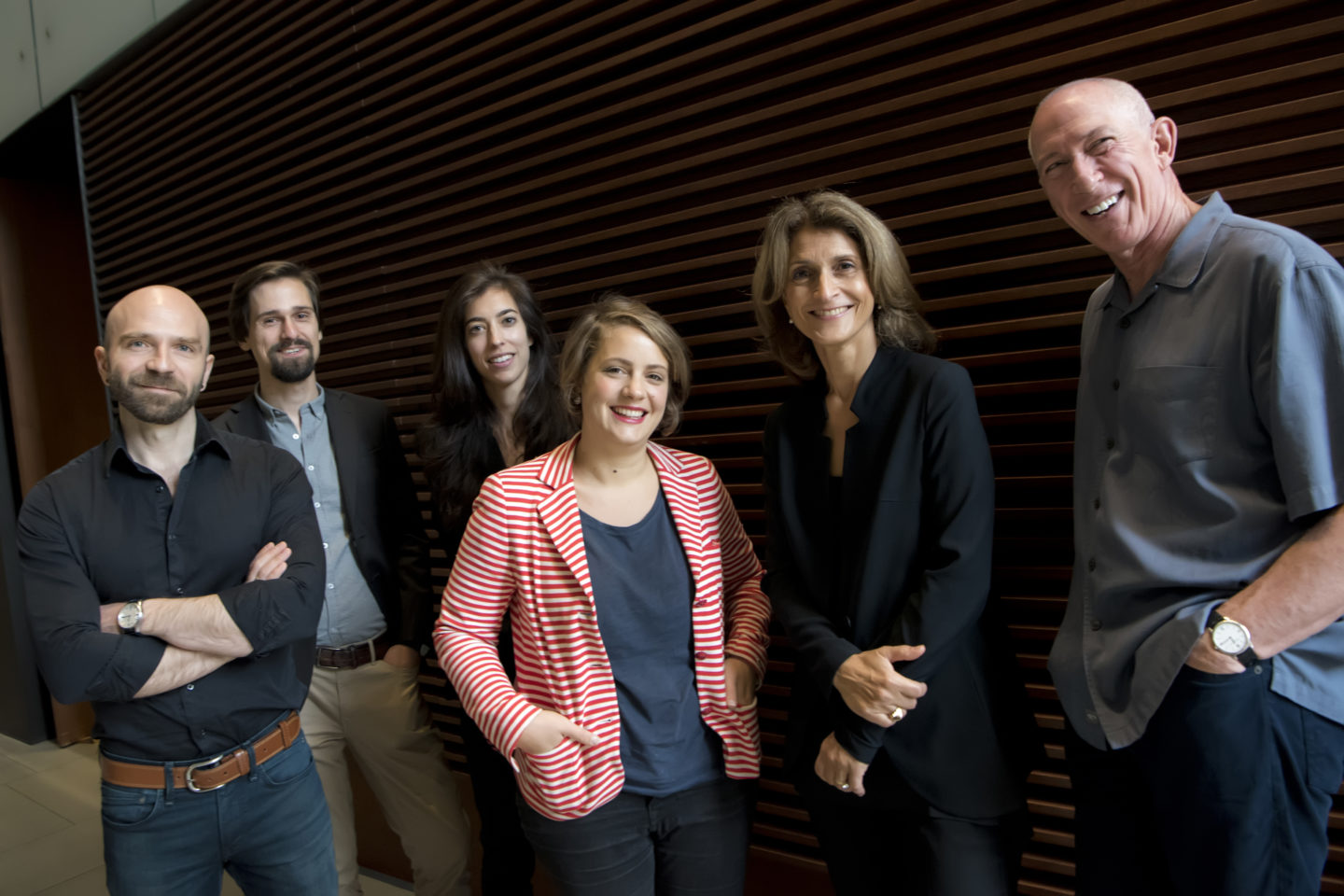
2019-20 Fung Global Fellows Cohort: Onur Ulas Ince, Bastiaan Bouwman, Claire Vergerio, Pascale Siegrist, Sophia Kalantzakos, and Jeremy Adelman, Director of the Fung Global Fellows Program from 2018 through 2020.